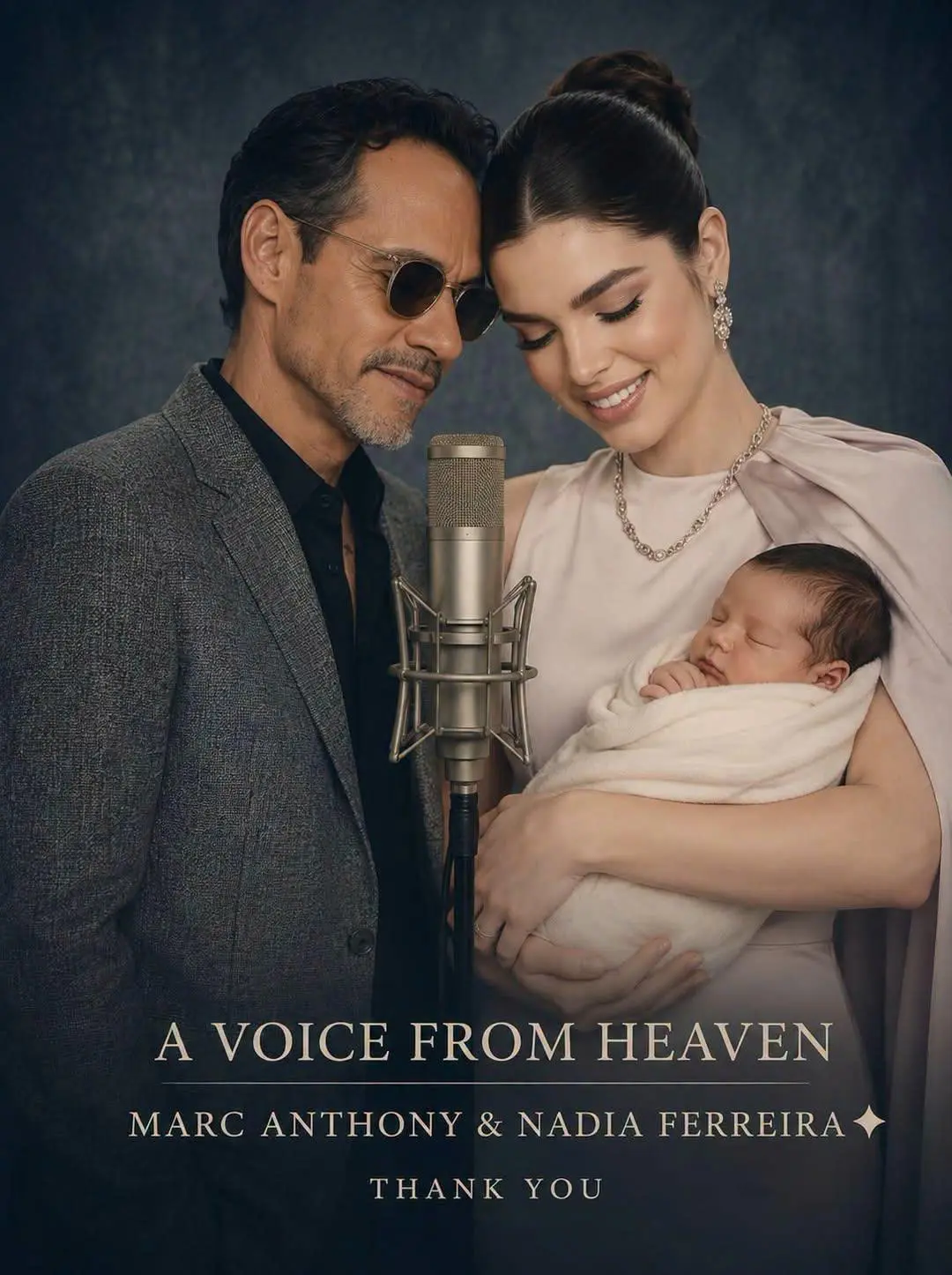
🎵 “Forever By My Side”: Marc Anthony and Nadia Ferreira’s Imagined Duet Stuns an Audience—and Sparks a Debate About Who Gets to Take the Stage
This alternate-reality story is invented. “Forever By My Side,” the performance, dialogue, and audience reactions below are not a verified song release or event.
The first rehearsal ended halfway through the opening verse. In this imagined story, Marc Anthony had begun singing with the intensity he wanted for “Forever By My Side,” while Nadia Ferreira waited for her entrance beside the piano. When her cue arrived, she missed it, laughed nervously, and asked the musicians whether they could start again.
Nobody rushed to reassure her that everything had been perfect. The pianist marked the passage, Marc stepped closer to listen, and Nadia explained where she had lost the rhythm. Their proposed duet began becoming a real performance within the story through the ordinary work of identifying what needed another attempt.
The song had grown from a conversation about companionship. Its verses described two people learning when to offer advice, when to listen, and when to admit that they did not have an answer. Marc liked the emotional directness, but Nadia worried that the earliest lyrics made their relationship sound effortless.

She pointed to a line suggesting that love always knew the right words. That had not been her experience, she explained in the invented rehearsal. Sometimes the most useful thing two people could do was acknowledge that a conversation had gone badly and return to it with more patience.
The songwriter, an invented musician named Elena Vargas, listened before offering a revision. Rather than promising perfect understanding, the new line described making time to understand each other again. Nadia preferred its honesty, and Marc found that it gave him something more specific to express with his voice.
That exchange shaped the entire arrangement. The musicians reduced the opening accompaniment so that the first verse felt like a conversation beginning quietly. Percussion would enter later, allowing the duet to build through the words instead of demanding an emotional climax from its first seconds.
Nadia’s part remained deliberately modest. She would sing a short passage, join the chorus, and deliver the final line alongside Marc. The arrangement suited what she could perform comfortably after preparation, rather than asking her to imitate the experience of the singer beside her.
Yet the decision to present the duet publicly created an immediate question. Would listeners judge the performance on its musical choices, or see Nadia’s place onstage as an opportunity made possible solely by her relationship? Both performers understood that affection would not prevent criticism, particularly once an announcement attracted attention.
Nadia raised the concern herself. She wanted the audience to hear a prepared contribution, not applaud her merely for appearing beside Marc. He agreed that the most respectful response was to keep rehearsing, credit the people involved, and let listeners form their own opinions.
Their rehearsal schedule included several uncomfortable moments. Nadia sometimes entered too softly, while Marc occasionally pushed the tempo in a way that made her next phrase difficult. The musical director stopped them both, reminding them that a duet required adjustments from the experienced performer as well as the newcomer.
That instruction changed Marc’s approach. He began listening for Nadia’s phrasing instead of treating her entrance as something fitted between his own lines. The improvement was audible, and she relaxed enough to ask for another run rather than hoping they would finish quickly.
The imagined performance took place in a small theater before an invited audience. There were warm lights, a piano, a restrained band, and no elaborate montage explaining the couple’s private history. Elena’s name appeared in the program alongside the arranger and musicians, acknowledging that an intimate song could still be the product of many people’s work.
Marc introduced the piece by thanking those collaborators. He described “Forever By My Side” as a song about returning to the conversation when easy answers had run out. Nadia stood beside him, holding her microphone with both hands while the pianist played the opening notes.
The first verse passed without interruption. Marc allowed the quieter phrases to remain quiet, resisting the temptation to turn every line into a declaration. When Nadia’s entrance approached, he looked toward her briefly and gave her the space they had practiced.
Her voice trembled on the first word. She steadied the next phrase, followed the accompaniment, and completed the passage without disguising its vulnerability. The audience remained attentive, and the performance continued rather than pausing to celebrate the fact that she had sung.
The chorus brought their voices together. They did not sound identical, and the arrangement did not require them to. Marc carried the stronger melodic line while Nadia’s contribution softened the closing phrase, creating a contrast that made the final words feel conversational.
The most emotional moment arrived before the last chorus. Nadia delivered a brief line about listening after an argument, and Marc answered with one about returning without a rehearsed defense. The exchange recalled the revisions they had made during rehearsal, giving the song a meaning grounded in its actual creative process within this story.
When the final note faded, applause filled the theater. Nadia looked first toward the pianist, then toward Elena in the audience, acknowledging the people who had helped her reach that moment. Marc thanked the band again before the two left the stage.

The imagined online response was less unanimous. Some viewers found the contrast between their voices moving, while others thought the duet worked better as a personal gesture than as a polished musical release. A few questioned whether its reception would have been as generous if an unknown performer had delivered Nadia’s part.
Those criticisms were not all interchangeable. An assessment of phrasing or arrangement could contribute to a useful discussion, whereas assumptions about Nadia’s intentions supplied information listeners did not possess. The couple chose not to answer every opinion with another emotional statement.
Instead, they shared a complete recording and the performance credits. Nadia acknowledged that preparing the song had challenged her, while Marc praised the work without claiming that everyone needed to enjoy it. Their response left room for affection and musical judgment to coexist.
Later, back at the rehearsal piano, they listened to the recording together. Nadia noticed a phrase she wanted to improve, and Marc identified a place where he had rushed. They opened the marked score again, preserving the evening’s joy while making room for the next attempt.
Reference photographs of Marc Anthony and Nadia Ferreira, plus a symbolic performance setting; these images do not document the invented duet.