

A Night That Nobody Expected
For someone who has spent years making history on the basketball court, Caitlin Clark is certainly no stranger to unforgettable moments. The Indiana Fever superstar has experienced roaring arenas, record-breaking performances, national attention, and the kind of admiration that most athletes can only dream of.
But imagine a moment when the spotlight has nothing to do with basketball.
No game-winning three-pointer. No championship trophy. No dramatic fourth-quarter comeback.
Just Caitlin Clark, Connor McCaffery, and a deeply personal announcement that leaves an entire room celebrating.
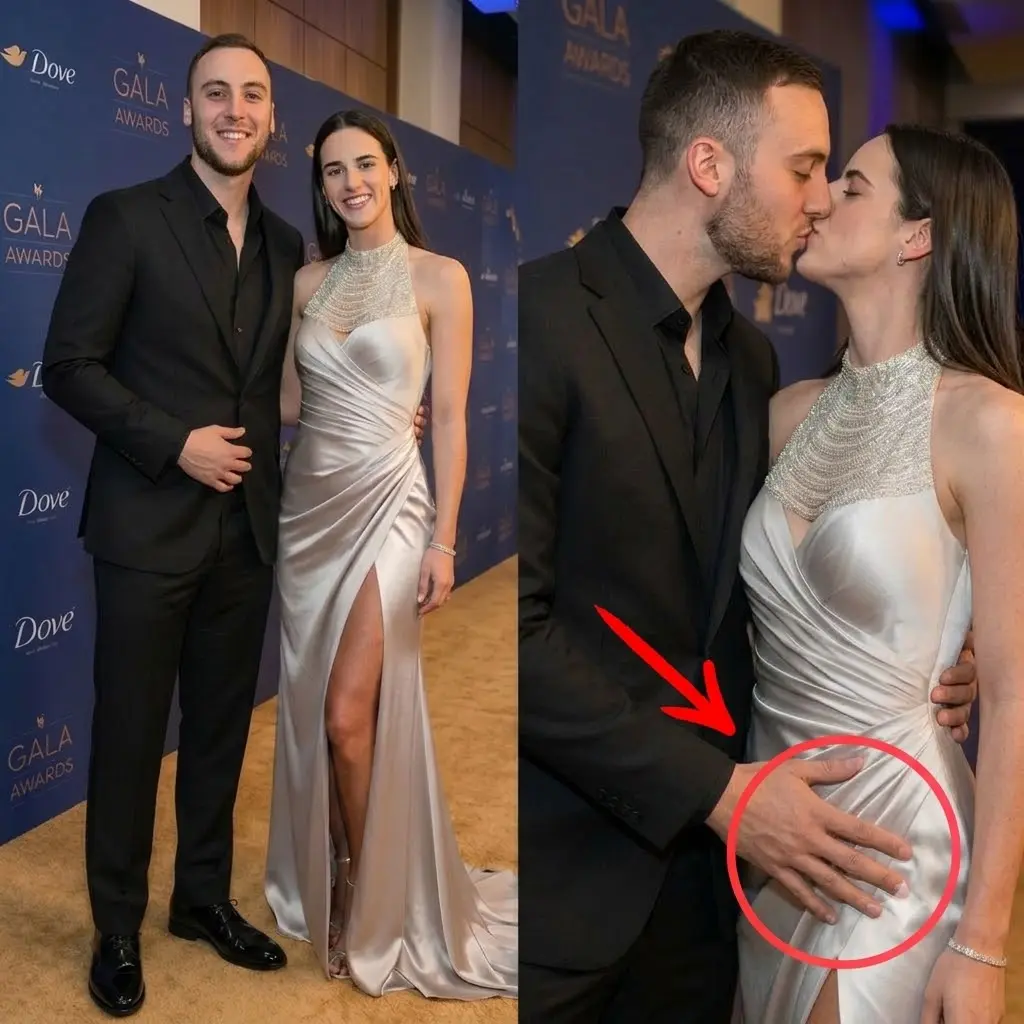
In this imagined scene, the couple arrives at an elegant evening gathering, surrounded by family members, close friends, and familiar faces from the sports world.
Clark looks radiant, wearing a sophisticated outfit that perfectly balances her athletic confidence with understated elegance. Beside her, McCaffery appears equally relaxed, occasionally exchanging smiles with the woman whose extraordinary basketball journey has inspired millions.
At first, nothing seems unusual.
The two greet guests, pose for photographs, and enjoy conversations with friends.
Then, just as the evening reaches its most anticipated moment, Connor gently takes Caitlin's hand.
The room begins to quiet.
And suddenly, everyone realizes something extraordinary is about to happen.
The Announcement That Changes Everything
In this fictional telling, McCaffery steps forward with a nervous smile.
He looks toward Clark before turning to the gathering.
For several seconds, he struggles to find the right words.
Then he delivers the announcement that nobody in the room expected.
They are engaged.
For one breathtaking moment, the entire gathering falls silent.
Then the celebration begins.
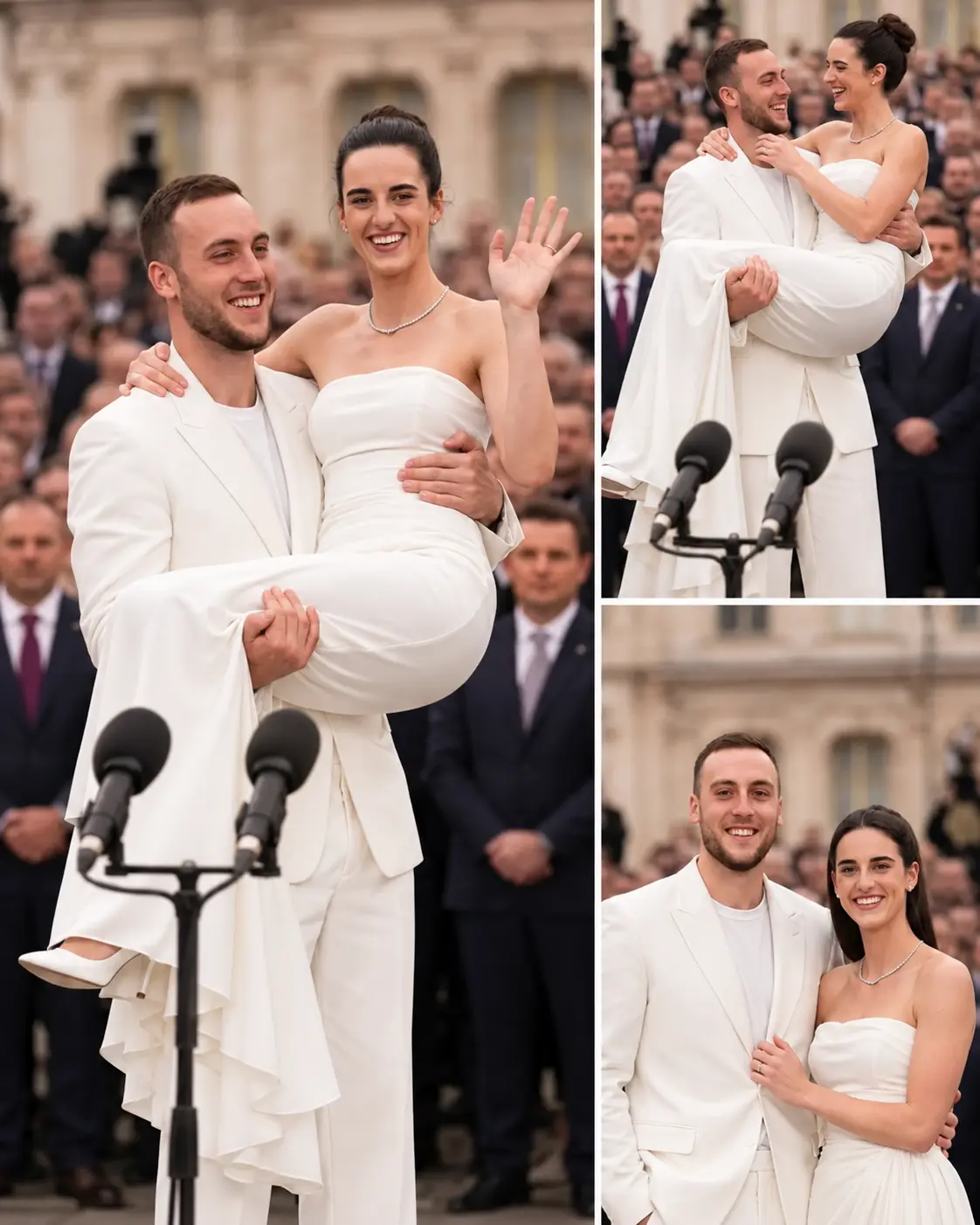
Friends rise from their seats. Family members embrace. Applause fills the room as Clark smiles through tears, holding Connor's hand tightly.
The announcement feels particularly meaningful because it is not presented as an elaborate celebrity spectacle.
Instead, it is a deeply personal celebration of two people choosing to build their future together.
Clark, usually so composed under pressure, appears overwhelmed by the emotion surrounding her.
In this imagined moment, she looks at Connor and laughs softly before wiping away a tear.
For an athlete accustomed to performing in front of thousands, this is an entirely different kind of spotlight.
And perhaps that is what makes the scene so moving.
From Basketball Beginnings to Something Deeper
The real-life connection between Caitlin Clark and Connor McCaffery has long attracted attention because of their shared ties to the University of Iowa.
Clark became one of the most recognizable basketball players in the country during her remarkable college career with the Iowa Hawkeyes.
Her extraordinary shooting range, fierce competitive spirit, and ability to transform the atmosphere of an arena helped elevate women's basketball to unprecedented levels of mainstream attention.
McCaffery, meanwhile, built his own connection to Iowa basketball as a former player for the men's program.
Their shared understanding of competitive sports provides a compelling foundation for their relationship.
Both know what it means to devote countless hours to practice, handle public expectations, and sacrifice personal time in pursuit of athletic excellence.
And although their professional journeys have taken different directions, that mutual understanding has helped make them a couple fans enjoy following.
In a world where professional athletes often face relentless public scrutiny, the idea of finding someone who understands the pressures of that lifestyle has particular emotional resonance.
That is why a fictional engagement announcement involving the pair feels so naturally suited to a romantic sports feature.
Their story combines ambition, friendship, loyalty, and the possibility of a future beyond the basketball court.
The Moment Caitlin Clark Becomes Emotional
In the imagined celebration, the evening's most touching moment arrives after the initial applause begins to fade.
Clark takes the microphone.
The confident basketball star who has answered difficult questions from reporters and faced some of the world's toughest defenders suddenly finds herself searching for words.
She looks toward Connor, then toward the people gathered around them.
Her expression says more than any carefully prepared speech could.
She speaks about gratitude, companionship, and the importance of having people who believe in you through every stage of life.
For a few moments, the competitive world of professional basketball feels very far away.
Instead, the focus is on something quieter and more enduring.
Trust.
Partnership.
The comfort of knowing that someone will be there whether the scoreboard shows victory or defeat.
Connor listens attentively, smiling as Clark speaks.
When she finishes, he embraces her.
The crowd responds with another standing ovation.
In this fictional scene, it becomes the defining image of the evening: two people standing together while the world around them celebrates.
Why Fans Are So Invested in Their Relationship
Caitlin Clark's popularity extends far beyond her extraordinary basketball statistics.
Supporters admire her competitiveness, determination, personality, and ability to inspire younger generations of athletes.
Millions of people have followed her journey from college basketball phenomenon to professional superstar.
But public interest in athletes often extends beyond their performances.
Fans become curious about the relationships, friendships, and personal experiences that shape the people they admire.
Clark and McCaffery represent an especially interesting combination because their connection developed within a shared basketball environment.
Their relationship also reminds supporters that even the most celebrated athletes have personal lives beyond their professional achievements.
For many fans, the appeal of a romantic milestone is not simply the possibility of an engagement or wedding.
It is the idea of seeing someone who has given so much to her sport experience happiness away from competition.
In the fictional online reaction to this imagined announcement, congratulatory messages spread rapidly.
Some supporters describe the scene as beautiful.
Others celebrate the couple's apparent happiness.
And many imagine what the next chapter of their lives might look like.
The phrase "real-life fairytale" begins appearing throughout the fictional reactions, reflecting the excitement of those who have watched their relationship attract attention over time.
A Love Story Beyond the Headlines
One of the most interesting aspects of Clark's public image is the contrast between her intensity during competition and the more relaxed personality fans sometimes see away from the court.
On the hardwood, she is fearless.
She challenges defenders, attempts difficult shots, and embraces the pressure of being the center of attention.
Away from basketball, the public occasionally sees a different side of the superstar through casual appearances, interviews, and shared moments.
That contrast makes the imagined engagement celebration particularly compelling.
In this fictional version of events, there are no basketball records to chase and no opponents to defeat.
There is simply an opportunity to enjoy an important personal milestone.
Connor, meanwhile, is portrayed as someone who understands that Clark's professional ambitions remain an essential part of who she is.
Their future is not imagined as a choice between love and basketball.
Instead, it is a partnership in which both can continue pursuing their goals while supporting one another.
That distinction gives the story emotional depth.
A meaningful relationship does not require someone to abandon their dreams.
Sometimes, the greatest partnership is one that makes those dreams feel even more possible.
What Could Come Next?
Naturally, a fictional engagement announcement of this magnitude invites speculation about what might follow.
Would the couple choose an intimate ceremony surrounded by family?
Would their Iowa connections influence the location?
Could familiar faces from the basketball world gather to celebrate?
And would Clark prefer a private wedding away from the cameras or a larger celebration reflecting the extraordinary public interest in her life?
These questions belong entirely to the imagined scenario, but they illustrate why celebrity romance stories attract such widespread attention.
For supporters, the appeal lies in picturing the next chapter.
Perhaps a quiet ceremony filled with family traditions.
Perhaps a joyful gathering with teammates and lifelong friends.
Or perhaps something wonderfully simple, with the couple choosing to keep their most meaningful moments away from the public eye.
Whatever the fictional possibilities, the underlying message remains the same: happiness does not have to be measured by the size of an audience.
The Bigger Meaning Behind the Celebration
For Caitlin Clark, basketball has already created a legacy that reaches far beyond individual awards and records.
Her influence has helped bring enormous attention to women's sports and encouraged young players to dream bigger.
But even the most extraordinary athletic careers represent only one part of a person's life.
The imagined celebration with Connor McCaffery highlights that distinction.
Behind every headline-making performance is a human being with relationships, hopes, and personal ambitions.
Supporters may admire Clark for her shooting ability and competitive determination, but stories about companionship resonate for a different reason.
They remind people that personal fulfillment and professional achievement can exist together.
And in the fictional world of this romantic announcement, that is precisely what makes the evening unforgettable.
A Fairytale Moment Worth Imagining
As the imagined evening draws to a close, Caitlin Clark and Connor McCaffery stand together for one final photograph.
Around them, friends and family continue celebrating.
The applause has softened, but the happiness remains.
Clark smiles at Connor.
He returns the smile.
For once, there is no scoreboard, no postgame interview, and no pressure to deliver another historic performance.
There is only the possibility of a shared future.
And that is the heart of this fictional love story.
Because sometimes, the most unforgettable victories aren't celebrated beneath the bright lights of a basketball arena. They're found in the quieter moments when two people choose to face whatever comes next together.
For fans who admire Caitlin Clark both as an athlete and as a person, the possibility of such a milestone is easy to celebrate.
And while this engagement scene is a creative imagining rather than a confirmed announcement, the warmth behind it reflects something genuine: the joy people feel when wishing happiness for two individuals whose journey they have followed.



LOS ANGELES — Imagine the lights dimming, the cameras turning toward the stage, and an entire room of music superstars falling silent as one of Britain's most beloved comedy legends prepares to reveal something nobody expected.
In this fictional imagining of the 2026 MTV Video Music Awards, Rowan Atkinson, internationally recognized for his unforgettable portrayal of Mr. Bean, steps into the spotlight alongside his longtime partner, actress Louise Ford, to deliver an announcement that transforms a glamorous awards ceremony into an unexpectedly emotional Hollywood moment.
The audience expects laughter. Instead, they witness a heartfelt celebration of love, family, and a new chapter together.
Editor's note: This is a fictional entertainment story. There is no verified evidence that Atkinson and Ford made such an announcement at the 2026 VMAs. The scenes and dialogue below are imagined.
A Surprise Appearance Nobody Saw Coming
The evening begins like any other major entertainment celebration, with spectacular performances, dazzling outfits, and some of the biggest names in music gathering beneath the bright lights.
But in this imagined scene, the atmosphere changes dramatically when the host announces two unexpected special guests.
Rowan Atkinson and Louise Ford.
For a moment, the audience seems uncertain what to expect.
Atkinson, whose extraordinary career has brought laughter to millions through Mr. Bean, Blackadder, and numerous film appearances, is not someone audiences would ordinarily associate with an MTV music awards ceremony.
Yet that is precisely what makes the moment so captivating.
Dressed in an elegant black tuxedo, Atkinson walks onto the stage with his familiar understated smile. Beside him, Ford appears in a sophisticated evening gown, radiating confidence as the audience rises to applaud.
The applause grows louder as the couple reaches the center of the stage.
Then Atkinson raises his hand.
The room falls silent.
And the announcement begins.
The Words That Change the Entire Evening
In this fictional account, Atkinson initially approaches the microphone with the playful hesitation that has made his comedic performances legendary.
He looks toward the audience, pauses dramatically, and glances at Ford.
For a few seconds, everyone expects a joke.
Instead, he speaks about the importance of finding happiness away from public expectations.
"For years, I've spent my life trying to make people laugh," he says in the imagined speech. "But the most meaningful moments are often the ones that happen when nobody is watching."
Ford smiles as the audience listens closely.
Atkinson continues, describing the value of companionship, trust, and the quiet happiness that comes from sharing everyday life with someone special.
Then comes the surprise.
The couple announces, in this fictional storyline, that they are preparing to celebrate a deeply personal new chapter with a private commitment ceremony surrounded by the people closest to them.
There is no extravagant publicity campaign.
No carefully staged promotional reveal.
Only a heartfelt declaration that their relationship deserves a moment of celebration on their own terms.
The audience erupts into applause.
For a performer famous for making the world laugh without saying a word, the emotional significance of the moment feels particularly striking.
Louise Ford Steps Forward With Her Own Message
Although Atkinson initially commands the room, Ford soon becomes the emotional center of the imagined evening.
Taking the microphone, she speaks about the unusual experience of sharing a life with someone whose fictional character is recognized around the world.
She describes the contrast between public celebrity and private companionship.
The world may see Rowan Atkinson as Mr. Bean, the eccentric comic character whose expressive face and unpredictable adventures have entertained generations.
But Ford's imagined message focuses on the person beyond the screen.
She speaks of ordinary conversations, shared laughter, family memories, and the importance of protecting a relationship from unnecessary attention.
"Love isn't always about the grandest gestures," she says in the fictional speech. "Sometimes it's about knowing someone will be there when the lights go out."
The audience responds with warm applause.
Atkinson turns toward her, visibly moved in this imagined moment.
Then, with perfect comic timing, he reaches into his pocket and produces a small teddy bear.
The crowd bursts into laughter.
It is a playful tribute to Mr. Bean's famous companion, Teddy, and a reminder that even the most emotional occasion can contain a little humor.
Why the Announcement Would Be So Unexpected

Rowan Atkinson has spent decades building one of the most recognizable careers in British entertainment.
His ability to combine physical comedy, expressive gestures, and carefully controlled timing has made him a distinctive figure in international popular culture.
Mr. Bean, in particular, became a worldwide phenomenon because its humor crossed language barriers.
Audiences from different countries and generations could understand the character's misadventures without needing elaborate dialogue.
But Atkinson himself has generally maintained a much more private public identity than the fictional character he portrays.
Louise Ford, meanwhile, has established her own acting career, including her work in British television comedy.
Their relationship has attracted public interest, but they have not built their lives around constant celebrity announcements.
That contrast gives the imagined VMAs appearance its dramatic appeal.
A couple known for discretion suddenly choosing one of entertainment's most visible stages to celebrate their personal happiness would be an extraordinary departure from their usual approach.
It would also create a memorable intersection between comedy, television, and the music industry.
A Standing Ovation and an Emotional Embrace
As the fictional announcement concludes, the auditorium rises to its feet.
The standing ovation begins near the front rows before spreading across the venue.
Some guests applaud enthusiastically while others smile at the unexpected tenderness of the occasion.
Ford reaches for Atkinson's hand.
He turns toward her and offers a quiet smile.
Then the two share an embrace.
There are no elaborate special effects or theatrical distractions.
For a few moments, the imagined spectacle of the VMAs gives way to something much simpler: two people celebrating their connection.
The audience's response becomes part of the story.
Rather than another headline about competition, awards, or celebrity controversy, the ceremony offers a reminder that public figures can inspire audiences through moments of affection and sincerity.
And naturally, Atkinson cannot resist one final comedic gesture.
As the couple prepares to leave the stage, he accidentally walks toward the wrong exit.
Ford gently redirects him.
The audience laughs again.
The moment closes with the perfect combination of comedy and warmth.
Social Media Imagines a Worldwide Celebration
In the fictional aftermath, the surprise becomes one of the evening's most discussed moments.
Fans share clips of the imagined speech, celebrate the couple's chemistry, and revisit some of Atkinson's most beloved performances.
One fictional fan reaction captures the spirit of the occasion:
"Mr. Bean made us laugh for years, but Rowan Atkinson showing his romantic side is something truly special."
Another imagined viewer writes:
"Sometimes the biggest surprise isn't a scandal. It's simply seeing two people happy together."
Others focus on Ford, praising her elegance and the sincerity of her message.
The fictional moment also sparks renewed appreciation for Atkinson's career.
Clips from Mr. Bean circulate alongside scenes from Blackadder and his Johnny English films.
For longtime fans, the celebration becomes an opportunity to reflect on how much joy his performances have brought to audiences over the decades.
A Different Kind of Hollywood Bombshell
Entertainment headlines frequently use words such as "shocking," "explosive," and "unbelievable" to describe celebrity revelations.
But this imagined announcement represents a different kind of surprise.
There is no bitter confrontation.
No public feud.
No dramatic accusation.
Instead, the unexpected development centers on commitment, affection, and the courage to celebrate personal happiness.
That distinction is what makes the fictional story emotionally engaging.
For decades, audiences have watched Atkinson transform awkward silences into laughter.
In this imagined VMAs moment, silence takes on a different meaning.
It becomes the pause before an intimate declaration.
A reminder that behind even the most recognizable public persona is a person with relationships, hopes, and a life that extends far beyond the entertainment industry.
What Comes Next for Rowan Atkinson and Louise Ford?
In the fictional storyline, the couple offers no specific date or location for their private celebration.
They simply express a desire to mark the occasion with family and close friends.
The imagined announcement leaves fans curious about whether photographs, additional details, or another public appearance might follow.
But the central message remains deliberately simple.
Not every meaningful life event needs to become a grand public production.
Sometimes the announcement itself is enough.
And if a performer as internationally famous as Rowan Atkinson were ever to choose such an unexpected setting for a personal declaration, it would undoubtedly generate tremendous interest.
For now, this remains an imagined Hollywood celebration rather than a reported event.
Yet its emotional premise resonates because it combines two things audiences have always appreciated about Atkinson: his extraordinary ability to create laughter and the humanity that makes his performances memorable.
In this fictional version of the 2026 VMAs, the greatest surprise isn't a trophy, a performance, or a celebrity controversy. It's a reminder that even the man who made the world laugh as Mr. Bean can become the center of a touching love story.
And for one unforgettable imagined evening, laughter and love share the same spotlight.
Facebook Twitter