Shohei Ohtani’s Fatherhood Story: The Joy Is Confirmed, but the Baby-Name Claim Needs Evidence
Verification note: The sources reviewed confirm Ohtani’s family announcements, but I could not verify a public baby-name reveal supporting the supplied headline.
Shohei Ohtani’s fatherhood is documented news. Reuters reported his first child’s arrival in April 2025, and MLB later confirmed a second child in June 2026. Neither announcement establishes the baby-name reveal suggested by the supplied caption. reuters.com
That distinction changes the story. A family milestone can be celebrated on its own terms, while a claim about a child’s name requires separate evidence. Readers should not have to reach the end of an article to discover that its most prominent promise remains unverified.
The April 2025 announcement introduced a daughter and expressed Ohtani’s gratitude to his wife, Mamiko. Reuters identified his social-media post as the source of the news. That gives the birth report an attributable foundation rather than leaving it dependent on anonymous accounts. reuters.com
The name question is less straightforward. NBC Los Angeles reported that the couple’s original announcement did not disclose their daughter’s name. That describes what was shared at the time; it cannot, by itself, establish everything the family may have disclosed afterward. NBC Los Angeles

A June 2026 report distributed through Fox Sports also said Ohtani had not publicly revealed his daughter’s name. That is a dated account of the public record. My searches did not identify a subsequent attributable reveal, so the conclusion here remains limited to what could be verified. FOX Sports
The supplied caption offers no name, announcement date, or original statement. Instead, it promises that a name is attracting extraordinary attention and directs readers elsewhere for details. Those omissions prevent its central assertion from being checked using the caption alone.
This does not make every expression of enthusiasm suspicious. Fans can respond warmly to a birth announcement without needing additional personal information. The problem arises when a headline converts that enthusiasm into a specific factual claim that the article cannot substantiate.
A name reveal would be comparatively easy to document if a clear public source existed. An original post, an identifiable interview, or reliable reporting that directly attributes the information could establish what was announced. Repetition across unrelated pages would not provide the same assurance.
The child’s identity also deserves particular care. Guessing a name from a photograph, a gift, or a decorative object risks attaching inaccurate information to someone who has no role in the public discussion. A plausible guess remains a guess, even when it sounds affectionate.
The same caution applies to explanations of a supposed name’s meaning. Without a statement from the family, an article cannot establish that a choice honors a relative, represents a personal promise, or refers to a memorable event. Such interpretations may sound moving while still being entirely unsupported.
There is no need to invent those details to recognize the emotional significance of parenthood. A documented expression of gratitude already tells readers something meaningful about an announcement. Adding imagined conversations or private reactions would change the piece from reporting into creative writing.
Nor should a birth announcement become evidence for assumptions about everyday family life. It does not reveal household routines, parenting arrangements, future plans, or private disagreements. Those subjects require their own sources rather than an author’s expectation of what new parents probably experience.
The phrase “devoted family man” in the supplied text is an appreciative characterization. It should be understood as that, rather than as a substitute for reporting about conduct or relationships. A careful article can convey warmth while distinguishing observable facts from praise.
Timing presents another issue. “Ohtani is a father” can sound like an immediate development when presented beneath an urgent-news symbol. Including the announcement dates helps readers understand whether they are encountering new information, background, or an older story being recirculated.
The two family announcements must also remain distinct. A claim about the first child’s name should not quietly become a claim about the second child. An article needs to specify which announcement it discusses before drawing conclusions about details that were or were not disclosed.
Images can make that confusion worse when captions are vague. A photograph of Ohtani and Mamiko at a public event shows them at that event. It does not prove that they announced a birth, revealed a name, or discussed parenting on the occasion pictured.
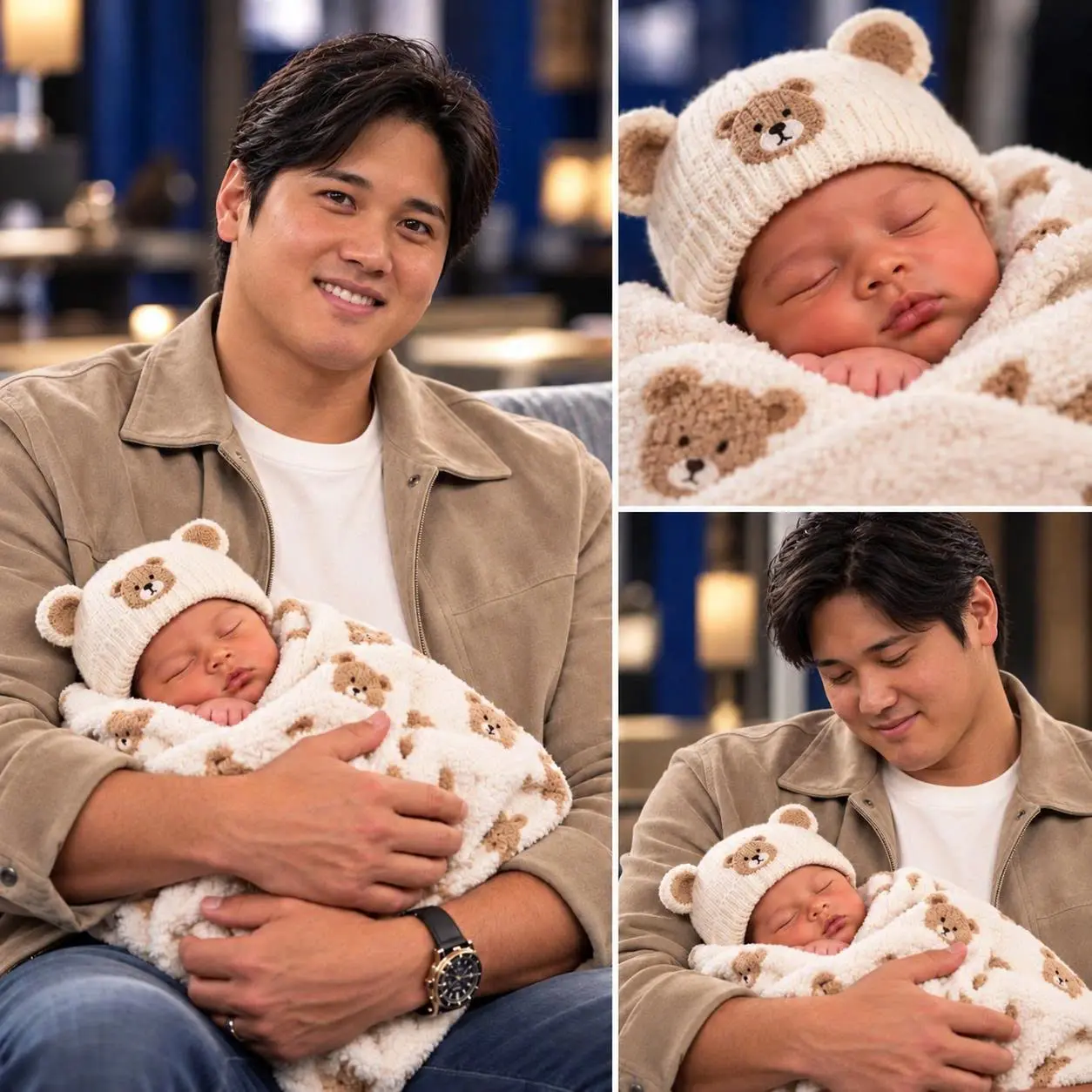
Symbolic baby photographs require equally clear labeling. A blanket, a pair of shoes, or an unidentified newborn may illustrate the theme of parenthood, but none should be presented as belonging to this family without verification. Attractive imagery cannot supply evidence missing from the text.

For an editor, the strongest available approach is to rewrite the headline around the established milestone. That allows the article to acknowledge fatherhood while openly addressing the unanswered name question. It also avoids promising readers a revelation that the reporting does not deliver.
A responsible correction would be specific. It would explain that the family announcements are documented and that the claimed name reveal was not verified in the sources checked. It should not overreach by declaring that the name has never been disclosed anywhere or that every related post is false.
That level of precision matters because uncertainty can be expressed without diminishing the celebration. Readers can congratulate a family while accepting that certain details are unavailable. Affection does not require turning an unanswered question into a mystery that somebody must solve.
The meaningful distinction is between sharing happiness and claiming access. A public announcement can invite goodwill without opening every part of a child’s identity to publication. Reporting should follow the information actually offered rather than treating curiosity as permission to manufacture more.
The available evidence therefore supports a story about Ohtani’s documented fatherhood announcements and the limits of the supplied baby-name claim. It does not support publishing a guessed name, an invented explanation, or alleged private remarks. A future attributable reveal could change that assessment, but the current article should stop where its evidence stops.
Reference photographs of Shohei Ohtani, Mamiko Tanaka, and a baseball setting. These images do not document a baby-name reveal.