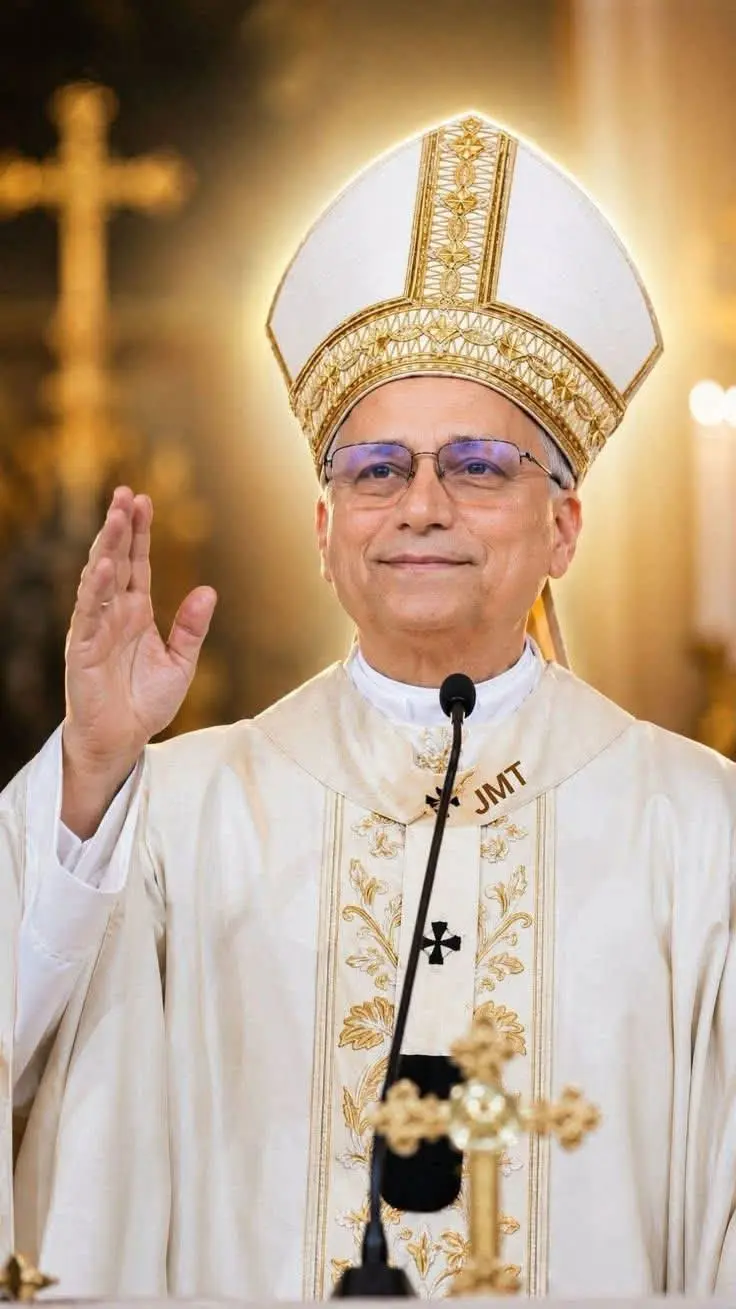
🚨 THE WORLD PRAYED IN SILENCE — THEN POPE LEO XIV SPOKE: His Emotional Message After Surgery Leaves Millions Asking One Haunting Question — What Was He Really Trying to Tell the World?
A Moment of Silence That Could Shake the Catholic World
VATICAN CITY — Imagine a moment when the entire Catholic world seems to hold its breath. Across continents, churches fill with whispered prayers, candles flicker before sacred images, and millions of believers wait anxiously for news about the spiritual leader of the Roman Catholic Church.
In this deeply emotional fictional scenario, Pope Leo XIV has undergone a serious medical procedure, leaving the faithful wondering when they might hear his voice again. Days pass with uncertainty, and the atmosphere surrounding the Vatican becomes one of solemn expectation.
Then, just when the silence seems unbearable, an extraordinary development takes place.
The Pope delivers a message.
It is neither a lengthy theological address nor a formal announcement about the future of the Church. Instead, the imagined message is deeply personal, filled with reflections on suffering, human vulnerability, gratitude, and the mysterious power of faith.
Within this dramatized account, his words move listeners to tears and raise a question that echoes far beyond the walls of Vatican City.
Was Pope Leo XIV simply thanking those who prayed for him, or was he offering the world a much deeper spiritual warning about the fragility of life?
The Imagined Surgery That Leaves the Vatican Waiting
The story begins inside a quiet medical facility, where Pope Leo XIV is portrayed recovering after an unexpected surgical procedure. Although doctors in this fictional narrative remain cautiously optimistic, the atmosphere among those closest to the pontiff is understandably emotional.
Members of the clergy gather in private prayer, while Vatican staff carefully manage his schedule to allow him the rest necessary for recovery. The familiar rhythm of public appearances and official meetings temporarily gives way to silence.
Outside the imagined medical setting, concern spreads among Catholic communities. Believers from different countries share messages of hope, organize prayer gatherings, and reflect on the spiritual significance of a leader confronting his own physical limitations.
For many, the emotional weight of the situation comes from a simple realization: even a Pope, entrusted with guiding millions, remains subject to the same human vulnerability as everyone else.
That awareness becomes the foundation of the fictional story's most powerful moments.
A Message That Changes the Atmosphere
Several days into his imagined recovery, Pope Leo XIV asks to prepare a brief message for the faithful. His advisers expect a conventional expression of gratitude, but what emerges is something far more reflective.
In the fictional statement, the pontiff speaks slowly and deliberately, acknowledging the uncertainty that can accompany illness and the strength people discover when they place their trust in God.
"When the body becomes weak, the heart may discover a strength it did not know it possessed. In suffering, we are reminded that love is not measured by power, but by our willingness to remain beside one another."
These invented words become the emotional center of the narrative.
Rather than focusing exclusively on his own recovery, the Pope directs attention toward those who suffer without recognition: hospital patients, grieving families, elderly people living alone, and individuals who struggle silently with fear.
His imagined message transforms personal suffering into a call for compassion.


Why the Imagined Words Leave Believers in Tears
In this fictional account, the Pope's message spreads quickly among Catholic communities. Its emotional power comes not from dramatic declarations, but from its simplicity and universal themes.
A mother praying for a sick child might hear reassurance in his reflections on suffering. An elderly believer confronting loneliness might find comfort in his insistence that no human life should be forgotten. A person grieving a loved one might recognize the importance of hope even when circumstances seem overwhelming.
The message resonates because it speaks to experiences that transcend nationality, age, and social status.
Within the story, some listeners interpret the Pope's reflections as evidence that his imagined medical experience has changed his understanding of vulnerability. Others believe he is simply emphasizing teachings that have always been central to Christianity.
Both interpretations lead toward the same essential theme: faith is not the absence of suffering, but the courage to confront suffering without abandoning love.
The Haunting Question: What Did Pope Leo XIV Really Mean?
As the imagined message reaches a wider audience, one passage becomes the subject of intense reflection. The Pope speaks about the limited nature of earthly power and the importance of preparing the heart for moments that cannot be controlled.
In the fictional address, he says:
"We cannot command tomorrow to arrive as we desire. But we can choose what we offer to others today: mercy instead of judgment, kindness instead of indifference, and hope instead of despair."
For some fictional observers, the words sound like a deeply personal acknowledgment of mortality. Others interpret them as a broader reminder that the Church must remain attentive to those who suffer.
The mystery does not depend on a hidden prophecy or secret Vatican revelation. Instead, it emerges from the profound uncertainty that accompanies every human life.
Could the Pope's imagined medical experience have strengthened his determination to speak more openly about suffering, compassion, and the responsibility of spiritual leadership?
That question becomes the driving force of the story.
Behind Closed Doors: A Quiet Conversation With Vatican Advisers
In the next chapter of this fictional account, Pope Leo XIV meets privately with several trusted advisers during his recovery. The conversation is not about political influence, institutional power, or the complicated responsibilities of governing the Catholic Church. Instead, he asks a simple question: how can the Church become more present in the lives of people who feel abandoned?
The imagined exchange becomes deeply emotional when the Pope reflects on patients who spend long nights in hospitals without visitors. He speaks about elderly people who struggle to find companionship and families who carry financial and emotional burdens without receiving the support they need.
His advisers listen quietly as he expresses a renewed determination to emphasize practical compassion. Within this narrative, the Pope's experience of physical weakness becomes a reminder that spiritual leadership must be expressed through service, not merely through words.
The conversation ends with a fictional request that future pastoral initiatives pay particular attention to those whose suffering remains largely invisible.
A Powerful Reminder of Pope Leo XIV's Spiritual Mission
The emotional themes of this imagined story connect with the real spiritual priorities Pope Leo XIV has expressed during his pontificate. Since his election in May 2025, he has emphasized peace, Christian unity, social responsibility, and the importance of building bridges between communities.
His choice of the papal name Leo XIV also carries historical significance, recalling Pope Leo XIII and the Church's tradition of engaging with questions of human dignity and social justice. These themes provide a meaningful foundation for a fictional narrative about suffering and compassion.
Yet it is important to distinguish those authentic priorities from the invented medical emergency described here. The imagined surgery and recovery message should not be interpreted as evidence of an actual Vatican health announcement.
The story's deeper purpose is to explore how a spiritual leader might use a personal experience of vulnerability to encourage believers toward greater empathy.
The Emotional Return That Inspires Thousands
As the fictional recovery continues, Pope Leo XIV gradually regains his strength. His medical team encourages rest, but the pontiff expresses a desire to reconnect with the faithful who have been praying for him throughout the imagined ordeal.
Eventually, he appears before a small gathering of clergy and Vatican employees. The room falls silent as he enters, walking slowly but offering a gentle smile to those waiting.
In this imagined scene, applause begins softly before growing into a heartfelt standing ovation. Several attendees appear emotional, while others bow their heads in prayer.
Rather than delivering another long address, the Pope simply thanks those present and encourages them to remember people whose struggles receive little public attention.
The moment becomes a powerful reminder that recovery is not always defined by a dramatic return to strength. Sometimes, it is expressed through gratitude, patience, and the quiet determination to continue serving others.
The Final Revelation: A Message About Life, Not Death
The fictional story reaches its most meaningful moment when the Pope offers one final reflection. Having experienced fear and uncertainty in the imagined medical crisis, he chooses not to speak about his own importance or the possibility of future suffering.
Instead, he focuses on the responsibility every person carries toward others.
"Do not wait until life becomes fragile to recognize its beauty. Do not wait until someone is gone to offer forgiveness. And do not wait for extraordinary circumstances to perform ordinary acts of love."
The invented words leave the gathering deeply moved.
For those within the narrative, the meaning of the message suddenly becomes clear. The Pope has not been attempting to reveal a secret, predict an approaching tragedy, or create uncertainty about the future of the Church.
He has been asking people to reconsider how they live.
What Did Pope Leo XIV Really Want the World to Understand?
As the imagined Vatican drama draws to a close, the answer to its central question becomes both simple and profound.
The message is about recognizing the value of human life before illness, loss, or tragedy forces that recognition upon us. It is about standing beside those who suffer, offering forgiveness while there is still time, and understanding that even the most influential individuals depend on the kindness of others.
In the final fictional scene, Pope Leo XIV sits quietly beside a window overlooking the Vatican gardens. Afternoon sunlight illuminates the room as he looks toward a small crucifix resting on a nearby table.
There are no television cameras, no cheering crowds, and no dramatic announcements. There is only silence, prayer, and a moment of reflection.
And perhaps that is the most powerful message of all: faith does not promise a life without suffering, but it can inspire people to transform suffering into compassion, gratitude, and hope.
In this imagined account, the world begins by praying for the Pope's recovery. It ends with a far more personal question for every reader:
If tomorrow were uncertain, what act of love, kindness, or forgiveness would you choose to offer today?