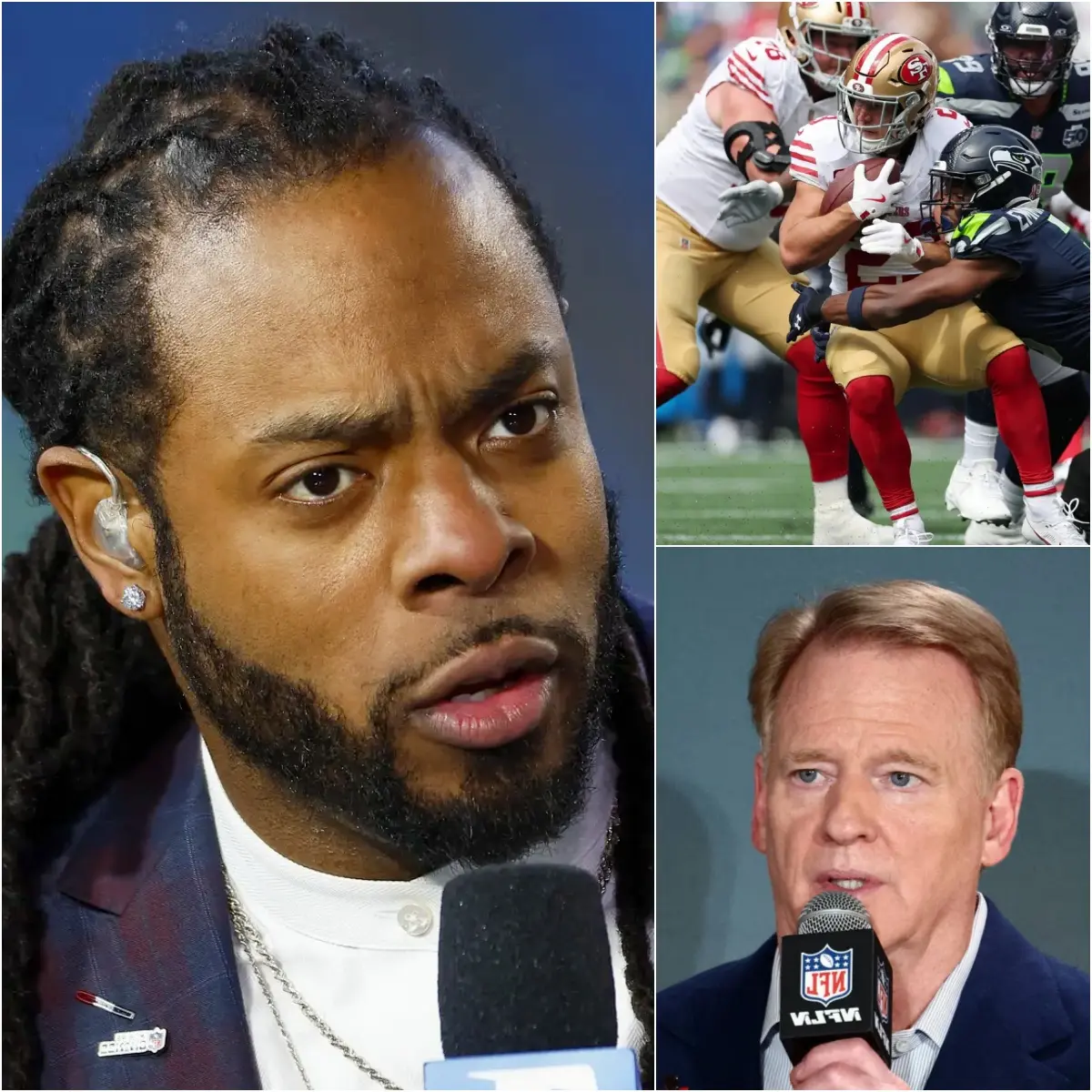
The reported 32–29 defeat of the Seattle Seahawks against the San Francisco 49ers has fueled controversy after claims emerged that former Seahawks star Richard Sherman and several players criticized a disputed officiating decision. The allegations have prompted questions about the game's decisive moments.
Sherman, known for his outspoken personality and successful career in Seattle, remains a recognizable voice among Seahawks supporters. Any verified criticism from the former cornerback would likely attract attention, particularly if it concerned a close divisional matchup decided by three points.
The circulating account claims Sherman questioned a ruling involving Cooper Kupp, suggesting the receiver deserved a more favorable decision. However, the exact circumstances of the play, Sherman's alleged remarks, and the identities of other players involved require independent confirmation before they can be treated as established facts.
Close NFL games often generate intense debate when an important ruling occurs late. Supporters naturally examine critical plays, searching for explanations when the final score leaves little room for error and one decision appears capable of changing the outcome.
For Seattle fans, the reported controversy would be especially frustrating if they believed Kupp had earned a first down. That outcome could influence the offense's available options, affect the remaining clock, and potentially create another opportunity to score.
However, a first down and a touchdown are different outcomes under football rules. The available account appears to blur those terms, making it particularly important to establish whether the disputed play involved reaching the line to gain, crossing the goal line, or another ruling.
Without the original footage and official game record, the precise nature of the controversy remains unclear. A reliable assessment would require identifying the down, distance, ball position, relevant ruling, and any subsequent review conducted by the officiating crew.
Sherman's reputation for confident commentary helps explain why an alleged reaction from him could spread quickly. During his playing career, he became closely associated with Seattle's defensive identity, and his opinions about the franchise continue to interest many longtime supporters.
Yet a former player's criticism does not automatically establish that officials made an incorrect call. Former athletes can offer valuable perspectives, but their interpretations must still be evaluated alongside the applicable rules and available evidence.
The claim that numerous Seahawks players criticized the decision simultaneously also requires verification. Direct quotations, authenticated interviews, or statements published through verified accounts would help establish whether the reported reaction occurred as described.
If several players independently raised concerns about the same ruling, their comments could help explain the frustration surrounding the game. Even then, the central question would remain whether the officials applied the rules correctly to the specific play.
The controversy reportedly intensified further after senior NFL leaders issued a response. However, no verified statement from league leadership has been established in the information provided, so the nature and timing of that alleged response remain uncertain.
An official explanation would be particularly useful if it identified the applicable rule and clarified whether replay review was available. Such details could help supporters understand the decision without relying exclusively on emotional reactions or incomplete descriptions circulating online.
Instant replay plays a significant role in professional football, but its application follows specific procedures. Not every judgment can be challenged in the same way, and officials must distinguish reviewable elements from decisions governed by other rules.
For example, determining whether a player reached the line to gain may involve the ball's position and the location of the player's body. Establishing whether a touchdown occurred requires a different assessment, including whether the ball crossed the goal line under the applicable rules.
That distinction matters because the circulating account refers to both a touchdown and a first down. Until the actual play is identified, it would be premature to conclude that a particular scoring opportunity was wrongly denied.
San Francisco supporters would also expect the result to be assessed fairly. A close victory can invite scrutiny, but criticism of a ruling should be supported by evidence rather than assumptions that officials intentionally favored one team.
The Seahawks and 49ers share a competitive division rivalry that regularly places additional emotional weight on their meetings. Games between these teams attract considerable attention, and controversial finishes can remain subjects of discussion long after the final whistle.
For Seattle, the practical response to any confirmed officiating concern would involve reviewing the footage and seeking clarification through appropriate league channels. That process would provide a stronger basis for evaluating the incident than relying on social media reactions alone.

For the NFL, maintaining public confidence requires clear communication when credible questions arise. Explaining how a significant ruling was reached can help fans understand the rules, even when they disagree with the final outcome.
Still, a dramatic headline describing a stolen victory should not be confused with proof of misconduct. Officiating errors can occur, but demonstrating that one happened requires evidence showing how the ruling differed from the applicable rules.
The same standard applies to claims that league executives delivered a shocking response. Without an authenticated statement, readers cannot reliably determine whether officials acknowledged a concern, defended the ruling, or declined to comment.
A complete account should therefore begin with the verified play and proceed through the official explanation, any available replay evidence, and confirmed reactions from the people involved. Each element would help distinguish substantiated developments from exaggerated online claims.
Until those details are available, the controversy remains unresolved in the information provided. Seahawks fans can reasonably demand clarity about a disputed decision, but the allegation that their team was deliberately deprived of victory remains unproven.
Ultimately, the key question is whether the ruling involving Cooper Kupp was consistent with NFL rules. Verified footage, the official game record, and any documented league response would provide the evidence needed to answer that question responsibly.